Director
ude.dn@yebraba
Aron Keith Barbey is the Andrew J. McKenna Family Professor of Psychology at the University of Notre Dame, where he directs the Human Neuroimaging Center and the Decision Neuroscience Laboratory. He began his academic career at the University of Illinois at Urbana–Champaign in 2011 and was promoted to Full Professor in the Departments of Psychology and Bioengineering in 2019. During his time at Illinois, he held several leadership positions, including Director of the Center for Brain Plasticity, Director of the Intelligence, Learning, and Plasticity Initiative, and Chair of the Intelligent Systems Research Theme at the Beckman Institute for Advanced Science and Technology. He later served as the Mildred Francis Thompson Professor and Director of the Center for Brain, Biology and Behavior at the University of Nebraska–Lincoln.
Dr. Barbey’s research investigates how intelligence emerges from the network organization and dynamics of the human connectome, applying methods from network neuroscience, cognitive psychology, and computer science. His work aims to achieve a deeper understanding of the neural foundations of intelligence and to enable scientific innovation in cognitive enhancement, neurorehabilitation, and biologically inspired artificial intelligence.
Over the course of his career, Dr. Barbey’s research group has won more than $30 million in research funding, with support from organizations including the Office of the Director of National Intelligence, the Department of Defense, the White House BRAIN Initiative, the National Institutes of Health, the National Science Foundation, and private industry sponsors such as Abbott Nutrition, Google Brain, and PepsiCo.
Dr. Barbey has received several honors for his contributions to the field, including the Mensa Foundation Prize for his work on the neuroscience of intelligence. He is co-editor of The Cambridge Handbook of Intelligence and Cognitive Neuroscience and The SAGE Handbook of Cognitive and Systems Neuroscience and serves as editor of the forthcoming Oxford Handbook of Cognitive Enhancement and Brain Plasticity. In 2023, he was selected to join the Defense Science Study Group at the Institute for Defense Analyses.
He received his Ph.D. in Psychology from Emory University and completed postdoctoral training in the Cognitive Neuroscience Section of the National Institute of Neurological Disorders and Stroke at the National Institutes of Health.
Research Assistant Professors

ude.dn@ycnumn
Nathan Muncy received his Ph.D. in Psychology – Cognitive and Behavioral Neuroscience from Brigham Young University in 2020, where he previously completed a M.Sc. of Neuroscience. He subsequently completed his postdoctoral fellowship at Florida International University in 2022 before working as a Research Associate at Duke University until 2024. He joined the University of Notre Dame in 2025 as a Research Assistant Professor.
Dr. Muncy’s research interests are in the psychology, neuroscience, and epidemiology of traumatic brain injury. His work focuses on utilizing structural, functional, and diffusion neuroimaging techniques to identify biomarkers of injury and how such biomarkers relate to neurobehavioral sequelae. He is also interested in how epidemiologic factors relate to injury and recovery.
Graduate Students

ude.dn@42axelaa
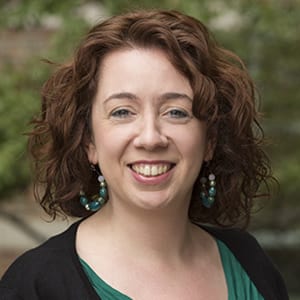
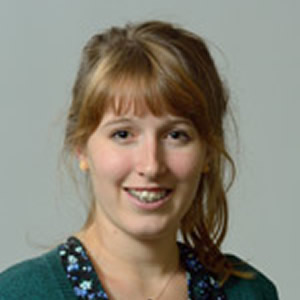
Alexanndra (Allie) Angebrandt earned her B.S. in Cognitive and Behavioral Neuroscience from the University of California, San Diego, in 2019. She completed a postbaccalaureate fellowship at the National Institute on Drug Abuse in 2021 before joining the Decision Neuroscience Laboratory at the University of Illinois Urbana-Champaign. There, she earned her master’s degree in Cognitive Neuroscience. In 2025, she joined the University of Notre Dame to continue her doctoral studies under the mentorship of Dr. Aron Barbey.
Currently a National Science Foundation Graduate Research Fellow, Allie’s research examines how brain network organization influences individual differences in executive functions. She employs structural and functional brain network analyses, drawing on principles from graph theory and control theory, to investigate the systems that support higher cognitive functions and learning. Her work also explores methods to enhance cognitive performance through a proactive and personalized approach to intervention.

ude.dn@leseima
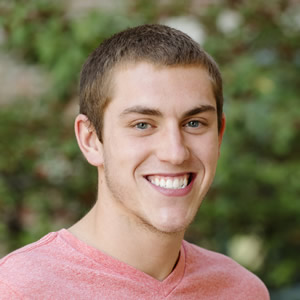
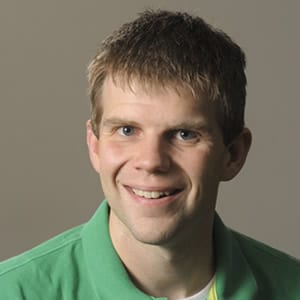
Anthony (Tony) Miesel earned a B.S. in Psychology and a B.A. in History from West Virginia University in 2025. He then joined the Decision Neuroscience Laboratory to begin a Ph.D. in the Cognition, Brain, and Behavior program.
Tony’s research seeks to explain individual differences in general intelligence in terms of neural differences. He seeks to answer questions such as: (1) What is it about the organization of the brain that allows for our generalizable problem-solving ability; (2) To what extent are individual differences in general intelligence reducible to brain differences; and (3) What specific features of the brain, be they structural and functional connectivity patterns, efficient organization, or even cellular and molecular mechanisms best explain differences in intelligence?

ude.dn@2xapm
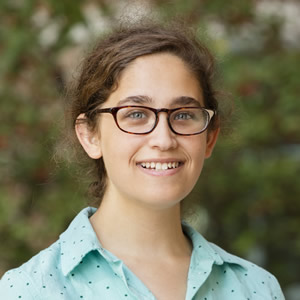
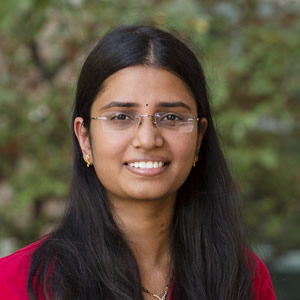
Melissa Pax earned her Bachelor of Arts in Psychology and Cognitive Science from Case Western Reserve University. Upon graduation, she joined the Division of Neuropsychiatry and Neuromodulation at Massachusetts General Hospital and Harvard Medical School, where she aided in a neuroimaging study investigating short-term memory deficits in patients with psychosis-related disorders. Eventually, she obtained a Master of Science in Computer Science at Northeastern University with the hope of continuing to bridge computational neuroscience research alongside clinical science. In 2025, she joined the Decision Neuroscience Laboratory to begin a Ph.D. in Clinical Psychology.
Her research interests include investigating functional connectivity patterns observed in traumatic brain injuries. By better understanding these relationships, she seeks to understand how they could better inform treatment outcomes in patients.

ude.dn@xocliwr
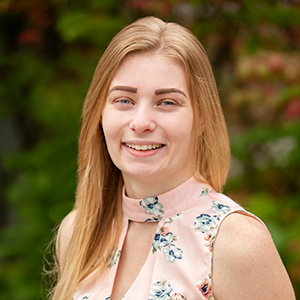
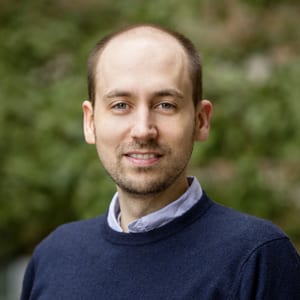
Ramsey Wilcox earned his B.A. in Neuroscience with a minor in Philosophy from the University of Colorado. As an undergraduate, he served as a research assistant in the Cognitive and Affective Neuroscience Laboratory, where he played a lead role in a neuroimaging study investigating the effectiveness of Mindfulness-based Cognitive Therapy for depressed women. After graduating, he moved to the University of Arizona to work as the lab coordinator for the Neuroscience of Emotion and Thought Lab, where he contributed to the establishment of the lab and supported the development and running of several neuroimaging studies on the neural mechanisms of internal mentation. In 2019, he joined the Decision Neuroscience Laboratory as a graduate student under the mentorship of Dr. Aron Barbey. He now continues his research with the lab at the University of Notre Dame.
Ramsey’s research explores the core principles of the Network Neuroscience Theory of Intelligence. His work examines whether intelligence: (1) emerges from interactions between multiple networks rather than relying on a single brain region or network; (2) relies on weak, long-range connections that support flexible and efficient global network coordination; (3) involves structural control mechanisms that orchestrate network interactions and drives global activity; and (4) depends on the brain’s small-world architecture, highlighting its capacity for flexible and efficiently organized global information processing. To assist in these investigations, he leverages advanced neuroimaging techniques, including joint structure-function network models, dynamic functional connectivity analyses, connectome-based predictive modeling, and graph and structural control theory metrics. Additionally, he serves as a data analyst for DARPA’s Measuring Biological Aptitude project, contributing to the development of predictive AI models.

ude.dn@63uwj
Jisheng Wu earned his B.S. in Psychology and Economics from the University of Illinois at Urbana-Champaign in 2019. During his senior year, he joined the Decision Neuroscience Laboratory as an undergraduate research assistant and later continued as a graduate student in the lab. In 2025, he joined the University of Notre Dame with the Decision Neuroscience Laboratory to continue his doctoral studies.
Jisheng’s research primarily focuses on: (1) understanding how lifestyle factors influence brain and cognitive aging; and (2) conducting intervention studies designed to enhance cognitive performance and overall brain health. Using advanced methods in neuroimaging, psychology, and nutritional sciences, his work has examined how better nutrition, indexed by higher levels of specific blood-based nutrient biomarkers, may be associated with healthier patterns of brain and cognitive aging. His other projects include creating novel neuropsychological batteries for assessing causal reasoning, and developing non-invasive experimental protocols aimed at improving visual attention and working memory.